
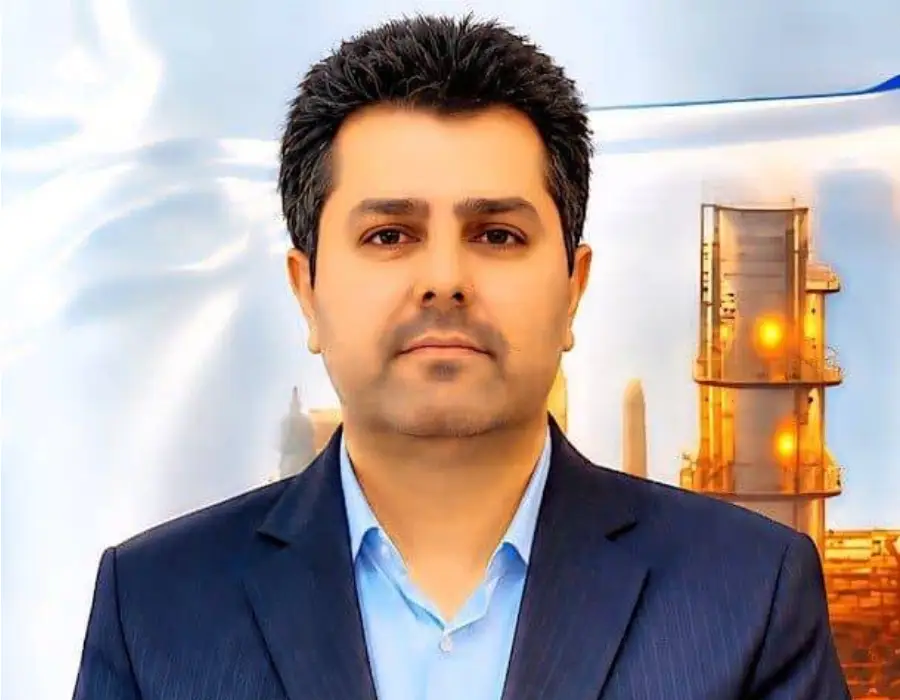
An article by Dr. Iman Iranmanesh, Scientific Secretary of Pharmex 2026 and Scientific Advisor to the Syndicate of Pharmaceutical, Chemical, and Pharmaceutical Packaging Manufacturers
The pharmaceutical industry should be analyzed in connection with the broader political, economic, social, technological, legal, and environmental (PESTLE) landscape. What happens in pharmaceutical factories, laboratories, supply chains, and markets is largely a reflection of the conditions shaped at the country’s macroeconomic level.
Exchange rates, inflation, financing costs, access to capital, trade policies, international restrictions, energy availability, consumers’ purchasing power, and the government’s budgetary and foreign exchange policies are all variables within the macro environment that directly influence micro-level decisions made by pharmaceutical companies—from selecting raw materials and technologies to investment, production costs, product development, employment, and even the ability to enter export markets.
Therefore, some of the pharmaceutical industry’s challenges cannot be addressed solely through industry-level solutions. Just as macroeconomic policies affect the pharmaceutical industry, the development of the pharmaceutical sector can also influence macroeconomic variables, including specialized employment, foreign currency generation, exports, technological development, and reduced dependence on foreign currency.
Pharmex 2026 can serve as a point of connection between these two levels—a place where macroeconomic issues are translated into the language of industry, while industry challenges and priorities are reflected in the language of policymaking.
Moving from an Exhibition to an Industry Platform
The experience of major international exhibitions also demonstrates that next-generation exhibitions are no longer simply collections of booths. CPHI, for example, now connects the entire pharmaceutical value chain—from APIs and excipients to manufacturing, packaging, technology, and services—while offering business matching, conferences, and specialized content alongside the exhibition.
At ACHEMA, the exhibition is similarly integrated with a scientific congress and specialized programs covering areas ranging from AI and Digital Twins to automation, intelligent processes, and advanced manufacturing technologies. The event’s Digital Hub is also designed as a space for showcasing, learning about, and networking around digital technologies.
This is the direction that can also be envisioned for Pharmex: moving from showcasing products to showcasing knowledge, technology, investment, and solutions.
In this context, Industry 4.0 and Industry 5.0 technologies, referred to as Pharma 4.0 and Pharma 5.0 in the pharmaceutical sector, are particularly important. Artificial intelligence, Digital Twins, advanced automation, data-driven operations, predictive maintenance, robotics, flexible manufacturing, and connected systems are no longer merely technological topics. They are gradually becoming key determinants of productivity and industrial competitiveness.
Industry 5.0 goes a step further by emphasizing not only intelligence and automation, but also human-centricity, sustainability, and resilience—concepts that are particularly important for the future of Iran’s pharmaceutical industry.
From this perspective, Pharmex 2026 should provide a platform for simultaneous dialogue on economics, technology, and industry.
Workshops and Panels: From Education to an Industry Think Tank
For this reason, specialized workshops and panels at Pharmex should not be limited to educational purposes. These programs can evolve into industry think tanks—spaces where policymakers, industry executives, investors, technology experts, universities, and knowledge-based companies can directly engage with the industry’s real-world challenges.
Potential topics could include:
- Macroeconomics and the future of the pharmaceutical industry
- Foreign exchange policy and industry financing
- Investment and new models of capital financing
- Industry 4.0 & 5.0 in pharmaceutical manufacturing
- Artificial Intelligence and Digital Twins in R&D and manufacturing
- The future of pharmaceutical raw materials and advanced manufacturing technologies
- Productivity, energy, and the economics of manufacturing
- Exports and regional competitiveness
- Digital transformation and the future of the pharmaceutical value chain
- Innovation policy and industry–academia collaboration
Pharmex: A Bridge Between Policymakers, Industry, Capital, and Technology
If Pharmex 2026 can build bridges between policymakers and industry, capital and technology, academia and manufacturing, and the domestic and regional markets, it will go far beyond being merely an exhibition.
The ultimate goal is to create something larger than an “exhibition”—an Industry Platform where challenges are identified, knowledge is shared, technologies are introduced, capital is connected with opportunities, and dialogue is transformed into collaboration.
Iran’s pharmaceutical industry needs such a platform now more than ever to overcome the challenges it faces today.
Pharmex 2026 can become a place where the pharmaceutical industry does not simply discuss its present, but also makes decisions about the economy, technology, and its position in the Iran of tomorrow.